
Blog
29.09.26 / 01 / smashing time
Today we did the final clearance in my parents' house before we move. Everything left in the house will be the basis of our new home. We couldn't take all of the furniture - the new house is actually bigger in area, but rooms are different shapes. We have an agreed CAD model of what goes where, trying to fit in all the good stuff and leave only the bad, but one or two decent pieces had to go.
The major casualty was my parents' 1950s wardrobe - a freestanding veneered timber piece in a vaguely 'contemporary' style, with double doors and hanging rails that run front to back not side to side. It had obviously been brought into the house (and in and out of the previous house) in one piece. Definitely not a flat-pack item. The clearance guys ripped the doors off and kicked the back panels out. This was difficult as the panels were ply in a solid timber frame, not Ikea cardboard. It was a brutal and noisy demolition. They had to take the overall frame down the stairs in one piece anyhow.
The clearance people charge by volume of van filled, so the space inside whole furniture is dead air that I am paying for. The wardrobe had 70 good years before its undeserving end. My parents liked good wood furniture and brought us up to appreciate it. Not fashionable, but with longevity. They came from a time when furniture was expensive so you expected to keep it for a lifetime, or as long as you could manage. It's a sustainable principle we should return to. But then the house clearance guys will need to change their approach :)
15.09.26 / 02 / northern line extension centenary
Holden’s Northern Line extension stations opened 100 years ago on 13th September. They are overshadowed now by his 1930s work, but at the time they were a startling achievement. In their context of elaborate smoke-blackened Victorian buildings, they stood out white and minimal, with the new Underground roundels in red and blue big in coloured glass or cantilevered out over the pavement. There were even searchlights on top of the buildings pointing up into the sky - which will have worked in the smoky atmosphere of the time but would just class as light pollution now.
The intention was to display the Underground as clean, modern and efficient. It’s hard to believe now, but the Underground was having financial troubles due to competition from trams and buses, no longer horse-drawn. Publicity genius Frank Pick was on a drive to re-present - rebrand we would now say - the disparate, Victorian Underground as a unified modern system. The Northern Line stations were the culmination of the first phase of the rebrand.
Pick had an acute sense of how modern to be without alienating the public. So did Holden. This couldn’t be an exercise in Corbusier/Bauhaus revolutionary Modernism. It had to be soundly built and wear hard. Nowadays we notice the residual Classicism and touches of ornament, but then people noticed all the ornament that was not there. It was shockingly bare, but not quite stark. Holden never saw the need to abandon tradition and ornament entirely, but he did believe in stripping buildings right back to their essentials and letting that speak.
Holden’s great leap forward was to reimagine the entrance to an underground station as a double height space lit by huge windows. At night the light from within, through the big glass roundel, would advertise the station. The entrances were as wide as possible with no doors. The blue glass canopy edge carried the station name, illuminated at night. The formula, first tried at (now-demolished) Bond Street and rolled out on the Northern Line extension, is still followed in ever-updated forms. It’s what a London Underground station is.
15.09.26 / 01 / project holden
Back in March, I was reading about Charles Holden’s Piccadilly Line tube stations - and realised that I had never visited any of them (except the ones in Ealing which don’t count). So I went, and photographed, and one trip led to another, and it turned into a project.
Holden has a couple of major buildings in Bristol, so I photographed them when I was down there. Went on a behind-the-scenes tour of the Central Library to do a proper job. There is only one full biography of Holden, published in 2007, so I got that. The author began the book in the late 80s as a doctoral thesis, and drew on family members and people who knew and worked with Holden, so in many ways it will never be beaten, as those people are all dead now.
But I was dissatisfied with the photos in the book. Many are from the 1980s, and it’s striking how grubby London was back then - so much has been cleaned and restored. This spurred me on to get good sets of photos, for some as-yet-undefined purpose. The long hot summer has been a great help. My inability to get out of bed in the morning has not been a help, as some buildings have better light in the morning. And getting my no-people-in-shot shots has been challenging, by the time I get to a tube station in the late afternoon rush hour. Same issue for traffic - most tube stations are on busy junctions, and the best place for the shot may be in the middle of the road.
It can be done. People and traffic come in pulses, and there is almost always a moment when there is nothing in shot. I have to be patient and watch for the upcoming gaps. Just a split second - click and job done. The only place I had to really compromise was Leicester Square - I swear it’s more busy than Piccadilly Circus. Probably I need to be there at 6am on a Sunday in November.
Holden’s non-tube buildings in London mostly only need to be photographed from the outside. The exceptions are the former Underground headquarters 55 Broadway, which I toured in 2017, and the University of London’s Senate House. I have never been sure how open Senate House is to the general public. There was an exhibition in the library in May that was public, I used my entry ticket to explore without flagrant trespass. I returned at Open House Weekend to photograph some spaces I couldn’t access before, so I’ve probably done my best without being a student or a security risk. I wish I could go to the top of the tower.
25.08.26 / 02 / new glasses
Every three to four years, for the last forty years, I need new glasses. This is primarily because I have astigmatism and the angle moves about, especially in my left eye. With age also comes long sight which increases slowly. About ten years ago the optician said, we can't do it all with a simple lens anymore, you either need two pairs of glasses or varifocals. And I want thinness rather than the fat lens edges that used to come with astigmatism. So my lenses are uncomfortably expensive, and I don't change them until the headaches and sore eyes force me to.
Frames are also not easy. It can be hard to find ones that work with my long angular face. Small differences between frames of apparently the same style make them look odd or awkward. It makes me seem fussy in the shop, but I'm searching for the frames that look natural on my face, just a part of me. I envy people with flat round faces that can wear anything, any fashion.
But I wear my glasses all the time, so the expense and the trouble seems (about) worth it. Success is not being conscious of wearing glasses, and looking like myself.
25.08.26 / 01 / books of obsolete facts
I’ve resumed clearing my parents’ books, the ones we retained as set dressing while we sold their house. My father loved books. Sometimes it feels like we’ll never get to the end, that the books are growing back on the shelves as we remove them.
But what to do with the books that no-one will want, the books of obsolete facts and outdated advice? The books that my father loved to collect. Encyclopedias and dictionaries and atlases. Repair manuals for the domestic items of 1972 or the plumbing of 1986. Tourist guides from 30 or 40 years ago. 1990s guides to the values of antiques and collectables. Learn to drive in ten easy lessons 1987 (with amusing illustrations).
In short, all the books that were useful before the internet.
I feel embarrassed to pass them on to charity shops or second-hand bookshops, who will never be able to sell them. I suspect they have a back-door route to dispose of unsaleable books, but it feels unfair to use them as a waste disposal service. Should I send the books direct to landfill in the general household waste?
Certainly there seems no other fate for the uniformly bound set of Reader’s Digest ‘condensed’ novels, five per volume. Booksellers won’t touch them. Anyone who wants to read a novel wants the whole thing. Most of the novels therein have been forgotten anyway. I’ve read that one can give them to old people’s homes, but that doesn’t seem fair either. The ones that can still read want the unabridged book, the ones that can’t...
But then:
What does one do with the books that ought not to be sold? That ought not to have been written? I have some children’s religious books from c.1960 that are so saccharine in word and picture as to misrepresent the faith and curdle the spirituality of any child. The translated-from-Dutch book of Christmas stories, all tacky or queasily off-key. The pretentious novel about a ‘great artist’. I’m uncomfortable about being a deliberate censor of books, but... I feel like I’m making the world a better place by deleting them.
24.08.26 / 02 / selling and buying
And then I put my mother's house on the market in late May. For a couple of weeks nothing happened, and then we sold it on the fourth viewing. This was quicker than expected. I suddenly had to convert my longlist of properties to buy into a shortlist to view, set up a week of viewings, had an offer accepted on a dream house that had only come on the market a couple of days before, and appointed conveyancing solicitors.
Then a mountain of forms for selling and buying, surveys of both houses - and now we're in the waiting period where the various solicitors do their searches and draw up draft contracts. No way of knowing how long this lull will last. I've never done any of this before.
Meanwhile I have modelled the new house in CAD to see how the furniture will fit - and find out what we have to get rid of.
24.08.26 / 01 / annuity
Not blogging because I’ve been busy. Have you noticed how often my blog entries are late in the month? Because I realise that another month is sliding by and I need to do something. It's not that I don't write blog entries, it's just that I don't finish them and publish. Let’s try and take things in order. I wrote most of this one in April the day after the previous entry.
I lost my job in late 2023, and took a few months off before looking for another one. Unfortunately I had an instinct that my mother’s health was about to take another major downturn. This meant I couldn’t apply for a new job, if three weeks in I had to go and look after her for an indefinite period.
Pretty soon this came to pass, and what I hoped would be a month to deal with the situation became seven months of full time caring up to her death. And then I then had to deal with the estate, to and fro across the country living a couple of weeks at her house and a couple of weeks at home. In all of this there was no clear space - or energy - to get another job.
So my financial position deteriorated. I was able to take my state pension, and then I flipped my work pensions for an annuity. They were due to mature in 2030, at which point I would consider whether to retire, or not. So in taking them a little early I haven’t missed out on much growth, and wouldn’t have had time to recover from losses.
I make it sound quick, but actually the whole process took concentrated work for the first three months of this year. By the time I was ready to appoint a financial advisor I found that I had educated myself on what I wanted, and only needed assistance to set it up.
So now I have an income and don’t need to work. Have I retired or not? I haven’t quite come to terms with the idea. I can still work if I want to. I had hoped to do a couple more major projects, and then see. But can I face the stress, the pressure, the long hours, the commute, the health damage, if I don’t need to? After all, in the old days if I'd won the lottery or inherited a fortune I would have walked. Architecture is at a transition point in this country - major changes in legislation, professional practice, software - if I were 35 I would take these on board and continue, but now? Should I step away, accept that it’s time to go?
And if so, what next? I never feared that I would lack things to do in retirement.
27.04.26 / 01 / paternoster square
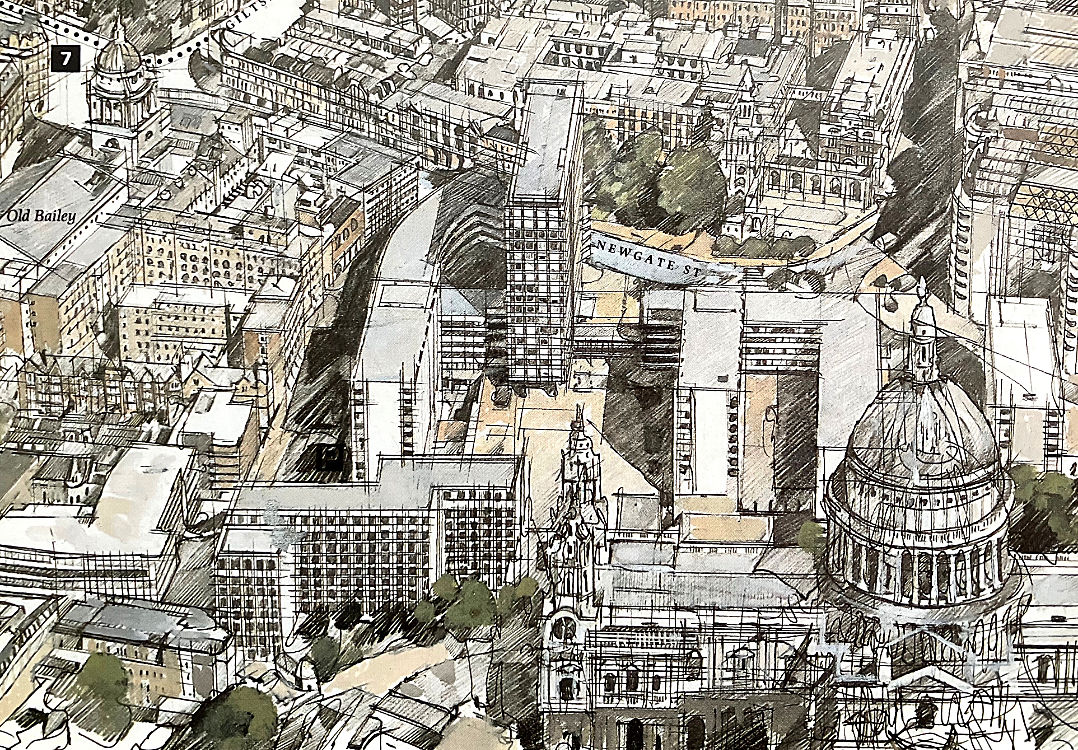
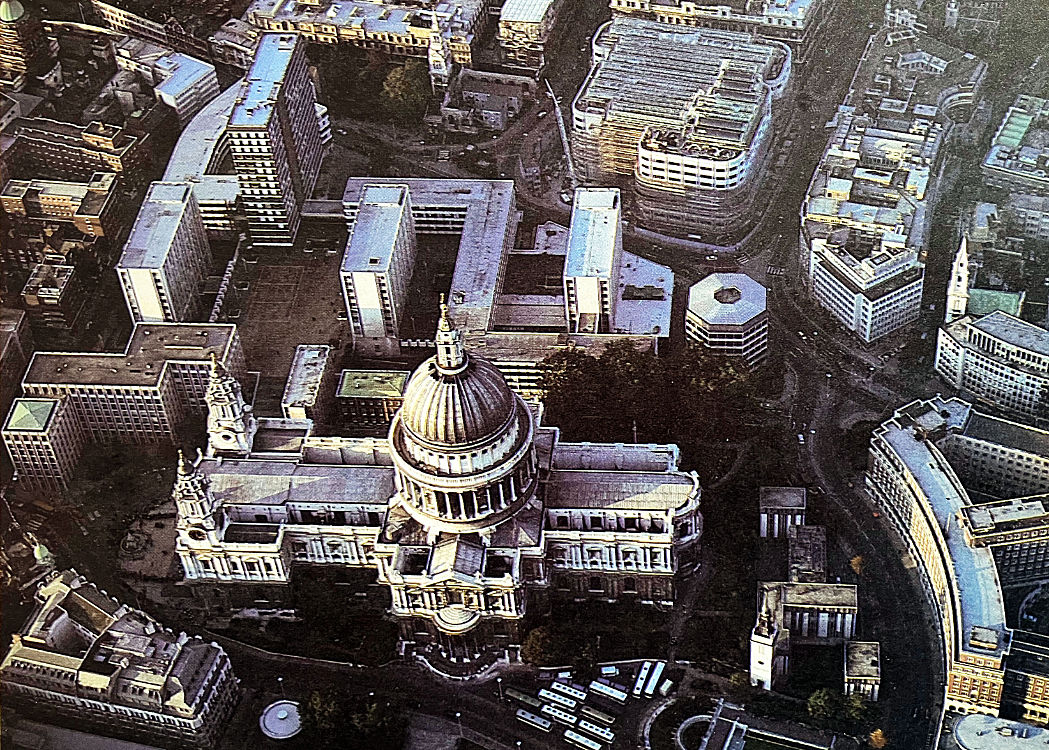
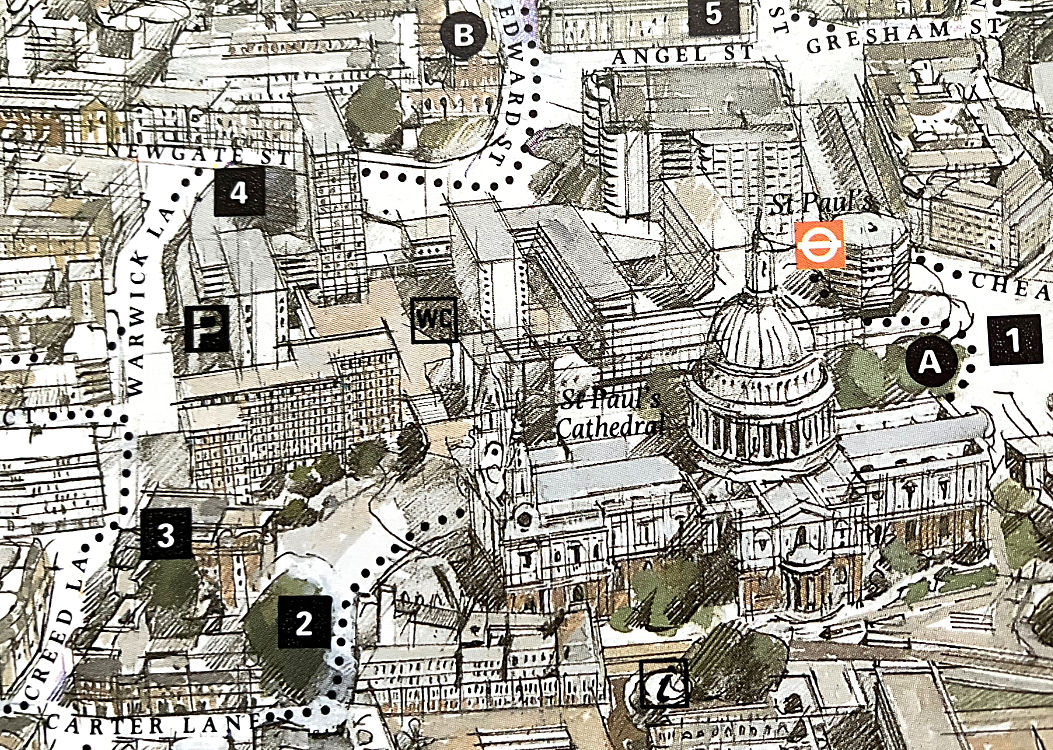
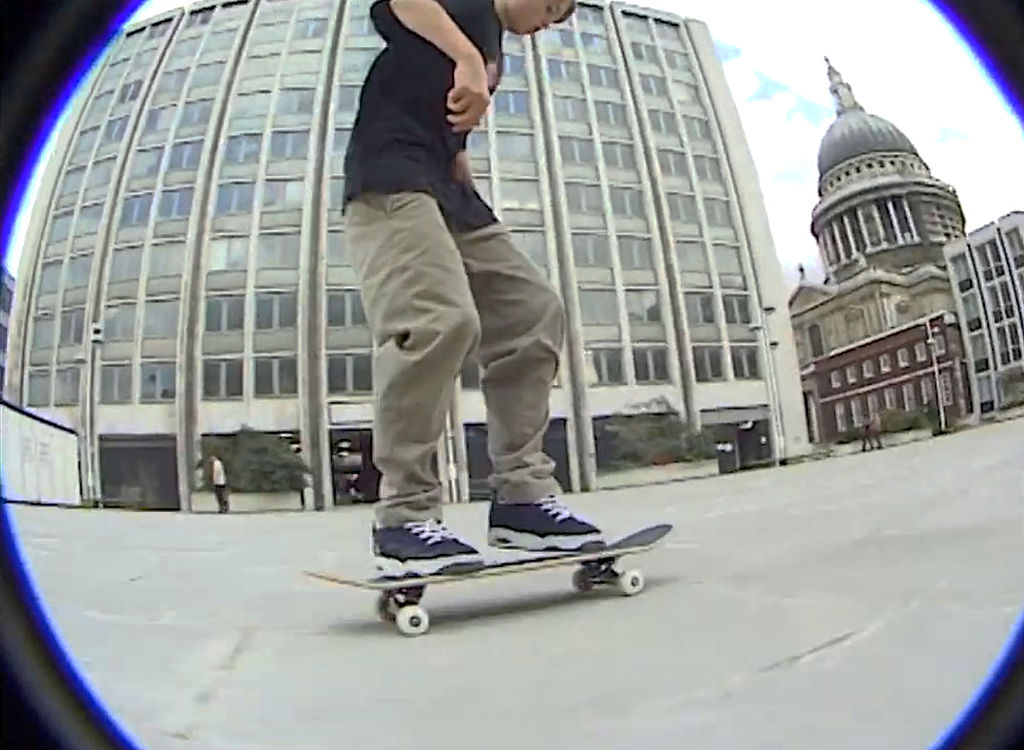
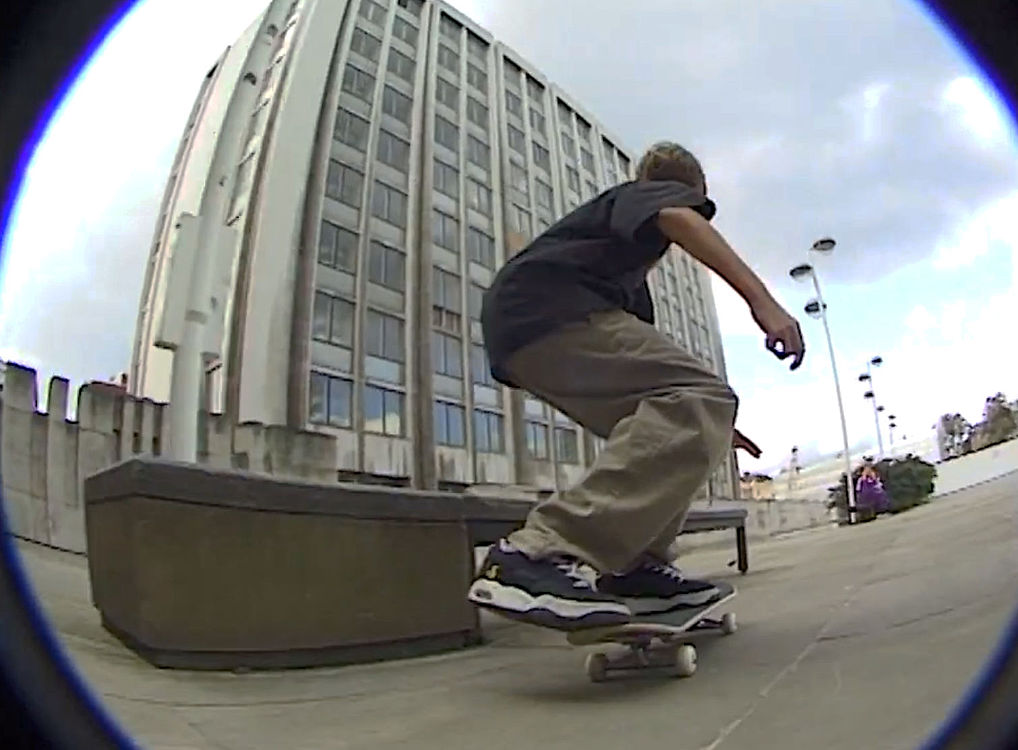
When digging through late 20th century photos of London, I’m always looking out for shots of Paternoster Square, next to St Pauls Cathedral. Not the current version, but the 1960s development demolished around 2000. I used to walk through it quite often for some reason, and it was a famous skate spot due to its expanses of paving and shallow steps. My skateboard wheels had St Pauls Cathedral on for that reason.
However, it’s quite hard to find any photos - it was so dull that photographers of all kinds systematically excluded it from their shots. It’s always sliding out of frame, and never the subject. I was surprised to find it well illustrated in an old book, but the illustrations make it look too interesting. About the only place to see it is in 1990s skateboarding movies! [first one is all at Paternoster, second one from 1:43 to 2:43]


In 1954 there was a silly spat in the pages of the Architectural Review. Charles Holden (in his town planner role) was advocating Classical redevelopment around St Pauls. The editor of the AR got on his very high modernist horse and severely criticised Holden, who made a patient but hurt reply, and was slapped down again as a reactionary. Reading the exchange now one feels that Holden deserved more respect. Especially as the doctrinaire modernist solution failed so badly. In fact neither man got what they wanted.
To the east of St Pauls, New Change was rebuilt in a busy but exhausted Neo-Georgian style, proof that the idiom had run out of road. It lacked the dull virtues of the style, which would at least have provided a dignified backdrop for the cathedral. If there is such a thing as passive-aggressive architecture, this was it. It sterilised a large part of the neighbourhood for 50 years.
To the north, the site of Paternoster Square was rebuilt as a doctrinaire Modernist precinct, pedestrian decks above car parking, between stumpy slab blocks. It was a piece of the ‘pedway’ system of first-floor pedestrian routes, but it didn’t join up with anywhere. A facade design of polite monotony was repeated like wallpaper across almost all of the blocks. It lacked the disrespectful virtues of brutalism that would have made it iconic, eventually. A slice of the Barbican, or the Southbank Centre, would have been better next to St Pauls regardless of initial outrage.
Ironically the care taken around St Pauls resulted in bad urban design. Compromised, second-guessed. The classical and the modernist developments were both too big, too monotonous, architecturally debased.
In the 2000s both sites were rebuilt as their opposite. Modernist Paternoster Square was rebuilt in an abstract classical style with streets and an actual square. Classical New Change was rebuilt as a Deconstructivist glass box sliced open by public routes. Both work. Both are far better than the preceding schemes.
In the end it wasn’t about style. It was about urbanism - permeability, walkability, scale. It was about architectural quality. Great buildings next to great buildings always works.
26.02.26 / 01 / vimeo deletion
I just deleted my Vimeo account. I meant to do it last year but the subs auto-renewed while I was distracted by my mother's final illness.
Back in 2008 Vimeo was the best solution for remote storage and showing your videos to the world. Youtube still had various limitations that I bumped against. Vimeo looked more professional, no ads, nice controls and reliable embed on your sites. But of course it changed direction towards a higher-priced business-oriented platform. I continued through on a legacy package but I really wasn't using it intensively or ambitiously enough. And nowadays hosting comes with huge amounts of storage, the HTML5 video tag handles everything sweetly, and even a phone can handle pages with several vids in. So I moved them into my sites - did smallfire.org and Grace a while back, just fixed my blog now. Also upgraded some early videos and added a few that were only on Vimeo, or even not published at all.
Now I have the tedious task of removing Vimeo from the site menu. Every page.
17.01.26 / 01 / christmas decorations
Tonight I put away the Christmas decorations for the last time in my parents’ house. I feel sad.
My mother didn’t bother with decorations or tree after the pandemic, due to age and dementia, though I insisted on putting a few things out to make it feel like Christmas. I found the old plastic tree in the attic during the summer - it must have been up there 25 years or so, my parents took to having real trees.
So having found a tree, and the baubles in my mother’s wardrobe, I put it up in December for one last time. It was the first time I had decorated a tree myself, there has always been someone to do it for me! I never had one myself because I am never at home for Christmas.
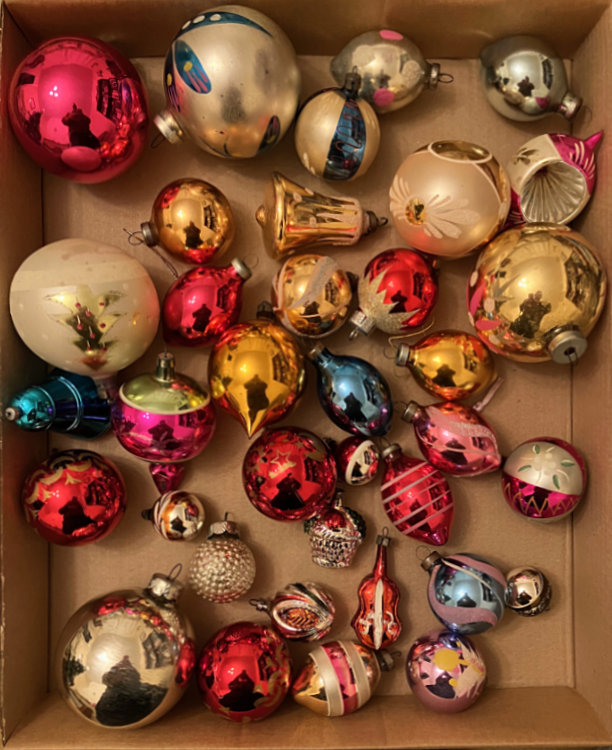
Half of the baubles date from around the time I was born - I have no memory of a time without them. And there are various things added during my earlier childhood, and then when my brothers were children in the 70s. After that it’s just odd gifts or things my parents fancied.
They never went in for fashions in decoration. The original c.1960 set were fashionable then, which makes them wonderful now, but my parents believed that decorations carry family memories and stories that develop over time, and are remembered each year as we look at the tree.
When we were children my father used to festoon the ceilings with paper decorations - brightly coloured tissue that concertinaed out to form bells and spheres and rows of figures. Of course we also spent hours making paper chains. I found some more recent shiny foil versions, but it was too much effort to put them up and the pinholes have vanished (one was only allowed to pin in the same place each year).
And now it’s all packed away, and the next time will be in another house.
Below, the 1960s glass baubles. The golden bell rings.
04.01.26 / 01 / filofax as blog
Before I threw out the Filofax diary inserts I went through them making notes of significant items. The notes looked like blog entries, so I turned them into an extension of my blog archives back to 1988. Click the blog archive link above to see.
There isn't enough material to do the usual monthly archive pages, so it's a page per year. I haven't included all of my notes, some things are too trivial or personal or have no story to tell. Conversely I've added things that weren't in the Filofax but are too important or interesting to leave out now that I've made the pages.
It's very clear that my life changed dramatically from 1996 onward, as I got involved in alternative worship. 1998-2002 is a whirlwind - I was simultaneously in several churches, several discussion boards, writing columns, making or editing websites, creating parts of events, photographing and publishing them, designing flyers and publicity and so on. It was possible because I only needed to work intermittently for a while. By late 2002 I had to get a full-time job in architecture again to repair my finances, so some of this stuff had to stop or happen more slowly, but then I started a blog.
I have diaries from before the Filofax, but they don't contain much information (and I have no desire to revisit the periods). There was something about a Filofax which encouraged a thicker narrative, perhaps because I lived out of it in an active way, it was always open on the desk being written in.
It's hard to remember how analogue life was in 1988. To publish a blog would mean typing it out (a word processor at best) and faxing it, or posting photocopies. I suppose that's what a zine was.
06.12.25 / 01 / family tree 2
I was surprised when various friends said they had no interest in their family trees. I know some people are obsessive about it, but if I were a Maori, an African, a Jew or a member of the Sicilian Mafia nobody would be surprised that I was researching my kinship network.
Modern Western society encourages us to see ourselves as individuals, without significant ties to kin or tradition or place. This brings many benefits in terms of self-actualisation, as well as oiling the wheels of capitalism and consumerism. The cost is alienation. Our psychology developed in tribes - the business of Dunbar’s number/the monkeysphere is about tracking relationships in a kinship group. Having broken free from family we recreate it as ‘chosen family’. Who and how we are in the world is always relational.
[Maybe Dunbar's number is why I baulk at researching the other ten siblings on every 19th century family tree branch. There's a point at which you want to limit the number of people in your 'relational family' to ones you can care about!]
So in researching my family tree I am renarrating myself. There is no scientific mechanism that I know of to make me want to do what my forebears have done - though I can imagine a cultural imperative. But this is to say that we construct a personal narrative that includes our family. Nowadays that is taken to mean only our immediate family, but to research one’s wider and deeper family opens one up to the possibility of them affecting one’s narrative too. It’s hard to learn that one comes from a long line of fishermen and sailors without wondering whether one should also have been one. We are encouraged to see it as a purely personal decision, but it feels strange that a chain has been broken (of course there are chains that need to be broken, but we are looking at honourable occupations). My nieces are good sailors, they just need to start catching fish :)
05.12.25 / 01 / family tree
Meanwhile I have been researching my family tree on Ancestry since late 2024. This had been coming for a long while, for a number of reasons. My brother had received a box of old family certificates going back into the 19th century, on our father’s side. My mother had told me all kinds of things over the years that I had surreptitiously written down and tried to make sense of in a self-created tree. She came from a broken home, she lost contact with her father and his family, and then with her mother’s family as well, so there was a mystery. We had a few photos, a couple of names, a few stories. My brother set up on Ancestry and joined me in. When my mother died and I came into possession of the family photos and other old documents, it gave new impetus.
It’s an extraordinary rabbit hole. It involves databases and archives connecting out there and feeding you stuff. You sift evidence in the light of stories or knowledge that you have. It feels like detective work in a story. Startling revelations arrive at 2:30am when you are about to go to bed. If you find the right thread to pull, a person’s life history can come tumbling out of nowhere in detail - otherwise there’s nothing. Military records tell you a lot - in illegible Edwardian handwriting. Old family hearsay is proved true, but there are hidden surprises and scandals.
On my father’s side I come from a long line of sailors and fishermen. We followed the fishing trade from Barking in the 19th century, to Great Yarmouth, to Grimsby. My mother’s side were itinerant farm labourers in the fens of Lincolnshire - constantly moving from farm to farm in the same 10-mile radius in what must have been a hard existence.
Back in the 19th century everyone had 6 or 10 siblings, which is daunting - too much new family! But some are very interesting. One sets up boundaries - do we have photos, or stories, or artefacts? Some people are ‘the family’, others are visitors who married in - it’s a subjective thing, where the main stream is. It depends on where you are in the tree.
The people I would most like to meet are two of my great-grandfathers, one on each side. Both feel like key characters in our family. Both led interesting but very different lives. My father’s grandfather was a sailor. His ship was in Hamburg when WW1 broke out, and he spent the war in a famous POW camp - we have the postcards. After the war he retired from the sea and operated the dock gates in Grimsby. My mother’s grandfather was in the Royal Field Artillery in the Boer War, then joined up again in 1914. He fought in Belgium in 1915, then in the Balkans in 1916 before being invalided out in early 1918. He separated from his wife and children early in the war, and by the time my mother knew him in the 1940s he was living with a woman who was not his wife - but he was a Roman Catholic and perhaps couldn’t get a divorce.
Another surprise was one of my father’s great-uncles. He was a fisherman, but also a Naval Reserve. In 1915 his boat vanished without trace. No-one knows what happened, but the crew are listed on the big war memorial next to the Tower of London which commemorates those who died at sea in both wars and who have no grave. Fishing is always risky and was riskier in the war, but fishing boats were also used for covert spying on German shipping movements, which may explain the memorial and the medals to his widow. We have his Bible.
03.12.25 / 01 / filofax
See, this is how a rabbit hole happens.
I wanted to fix the velcro on my umbrella (the bit that wraps round and holds it closed). I got the sewing box out and found that the cotton had mould on - an old leather cord had gone mouldy. So I got the rest of the things out of the drawer to check them, including all the Filofax diary inserts that I had kept right back to the 80s. I had been thinking about getting rid of them anyway, but of course I had to go through them to check. Keeping them wasn’t just sentimentality - it was essential pre-digital record keeping. Periodically one would need to give precise dates of employment or residence for something.
It wasn’t just an 80s fad, although a matt black Filofax in a Chevignon backpack made me ‘one of the 11 trendy people this week’ (The Face) in 1988. It was the analogue equivalent of a smartphone, with paper apps.
I got a Filofax in late 1987 after a change of job, to record my work diary, timesheet hours, contacts etc in a compact and professional way. One was given ‘work diaries’ but they were always ugly and random formats. One thing you could do with a Filofax was keep half of the previous year’s diary in alongside the coming year, so you could refer back. There were lots of tempting multicoloured inserts for all kinds of things, I bought a few but didn’t much need them - it was always about the diary.
I always recorded the truth about my work hours and what I was doing in my own diary - and then chose what to record officially. Some employers didn’t allow you to record overtime, but I always kept a record of actual hours. I think it’s disgraceful and stupid not to know what your workforce are actually doing, regardless of whether you pay them for it or not. You need to know who’s under pressure, or struggling, or slacking, which projects need resources and so on. Until the late 2010s, working hours recorded on weekends meant I had travelled into the office. It’s sad to see how often that happened.
Eventually digital record-keeping and calendars took over, but it took a while for them to be reliable and to sync properly between devices and software formats (and one’s work calendar isn’t portable between employers). Until then the Filofax was a stable personal record. I started to use Apple Calendar at the beginning of 2013 - it is empty before - and I stopped using the Filofax.
The problem by then was that the information didn’t sync. This wasn’t an issue when nothing synced, but it became an issue when other things did. Digital things shift about because there’s little cost to doing so. It became tiresome to cross out and rewrite meetings that kept changing time and venue right up to the last minute. And phone numbers in a Filofax can’t be called by touching them.
My first binder was a 1987 ‘Wellington’ in ribbed black rubber. I have haptic memories of the magnetic clasp and rubber ribs when I look at pictures. The chunky thingness of it was pleasing, I wish I'd kept it. In 1999 I got the Personal Active model, also rubberized, which zipped up to stop the inserts getting dirty in my bag - but it was a big beast. I downsized in about 2010 to a small one to save space and weight.
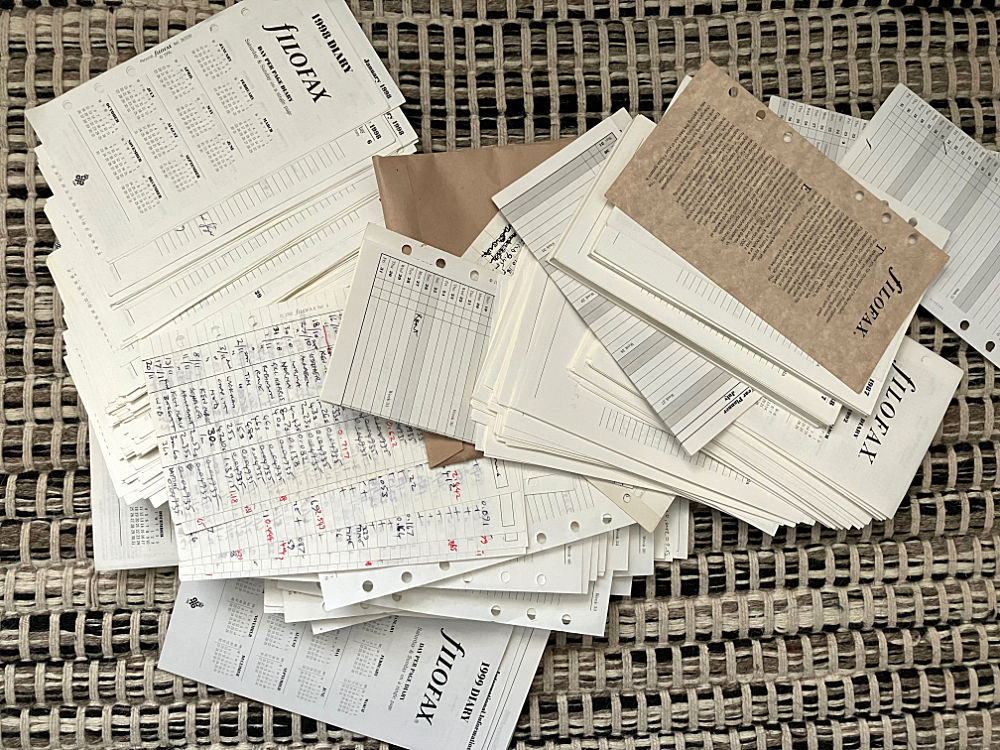
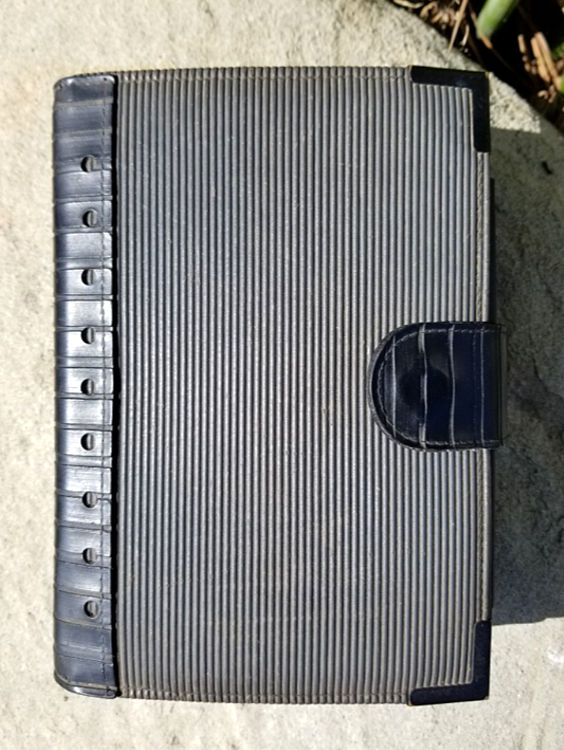
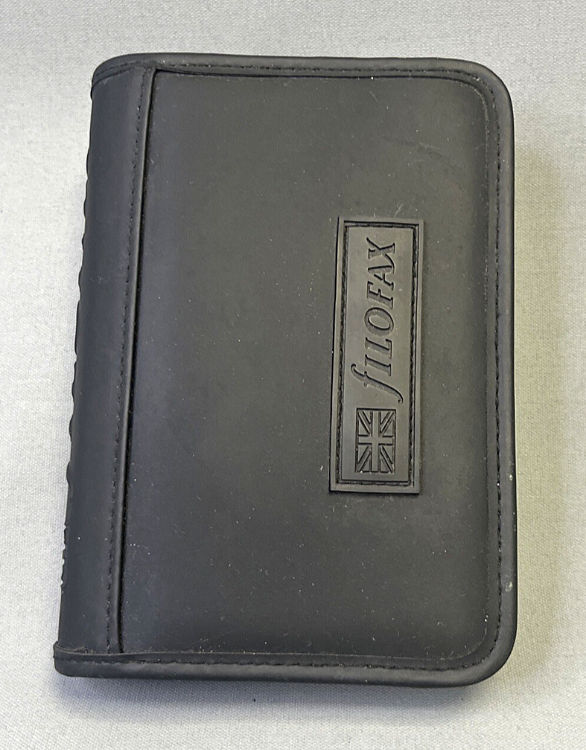

Above, some of my old inserts, 1987 Wellington, 1999 Personal Active (not my photos), my untidy desk 2003.
The place of the Filofax in my bag was taken by a moleskine for notes and sketches. It’s more compact and stays bound in its cover when you’ve finished with it. It’s strange that I never used the Filofax for that kind of thing, I always meant to.
06.11.25 / 01 / collecting
Back in the summer I went through the contents of my mother’s house, to see what there was in cupboards and the attic, to make an inventory and value it for estate purposes. I threw out the junk to clear the ground, but otherwise I didn’t rearrange anything.
Now I am going through it all again, making collections with an eye to give or take away. Things that were scattered are now brought together.
My father’s life is in a large tin. It already was, my mother put it there, but I have added. Boys Brigade badges, cards, certificates, school reports, his drawing instruments, a cigarette case, and so on. My mother’s life is in a box, and a tin, and a bag right now. She kept so many cards - her 21st birthday, wedding, first anniversary - beautiful 1950s cards, bright pinks and baby blues, kitsch, but more delicate and coherent than nowadays. Add in the Golden Wedding cards, the Valentine cards from my father, the sympathy cards when he died. And so on. My mother’s diaries, 30 years or so, are in a drawer, to be gone through sometime. These are things that can’t be thrown out, but they need custodians. Not owners, because they belong to the family and will be passed on. Maybe one day some of these things will go, when they have lost their significance, but not yet.
There are specific legacies to be given, but we need to think about keepsakes for other family members. For me and my brothers, many things come to us naturally. Stuff about us that our parents kept, reports and certificates and photos. Childhood cards we gave that they kept, which now return to us.
I have a list of the furniture - the things we will keep, if we can make space, and the rest. And the many domestic items that are not exactly personal, but are significant or interesting. Part of the home or of our lives. I have to restrain my magpie tendencies and let others have their choice!
It’s emotionally arduous work. It’s a process of dismantling. Drawers are empty, gaps appear on shelves. The fabric of a home begins to dissolve. It’s probably always hard, but this house has been the family home for almost 60 years. It’s not just the last place our parents lived.
06.10.25 / 01 / jeff hawke
I’ve had a couple of images from Jeff Hawke floating around my mind since the early 70s. One is of a scary woman called Lilith. The other is Hawke and a companion driving into a future London - it would be great to see that now for comparison. I did find Lilith, but not yet the London picture.
Jeff Hawke was a daily comic strip by Sydney Jordan that ran in the Daily Express from 1954 to 1974. In the early years it was drawn and mostly written by Jordan, and was a standard space action series, set in a 1980s and 90s that looked like the 50s but with '2001'-style aerospace technology - moonbase, space station, supersonic airliners etc. Jordan had studied aerospace engineering so the strip showed actual advanced projects that didn't make it in real life.
In 1960 Jordan’s dialogue writer Willie Patterson took over the plots and storylines as well, and the strip took a highly imaginative turn, featuring weird and very various aliens who bickered and schemed and dragged Hawke and friends into bizarre or perilous situations that had nothing to do with the usual invasion-of-Earth stuff. Patterson retired in 1969 and the strip was never as humorous and clever again. By then the aliens were often scantily clad women and the strip took an erotic turn with much partial nudity. In 1974 the newspaper suddenly cancelled it (not because of the nudity as far as I know).
Jordan began a new strip in 1976 called Lance McLane, set in the late 21st century. This ran in a Scottish paper until 1988, but to sell it for syndication Jeff Hawke was 'transmitted' into the body of McLane and the strip continued in two versions as Jeff Hawke and Lance McLane. There was no continuity with the original strip, Hawke didn’t even look the same. The artwork and writing were often done by others with variable results.
Jeff Hawke was popular in Europe (quite a lot of strips on this site, but in Italian! Go to the bottom for the links.) You can buy the full run in Italian, but the English language republication has been limited. There are a couple of anthologies of 60s stories by Titan Books, and the Jeff Hawke Club published the whole lot in a limited edition 2003-2018 but appears to be defunct. The early-00s version of their website is fun though.
I was too young for the best years of Hawke, and since I didn’t read the newspaper daily I couldn’t follow it anyway - there were some striking images, but in truth it was too sophisticated for me then.
05.10.25 / 01 / postmodern or post-modern?
I don't quite know whether to hyphenate or not. Jencks always hyphenated, to emphasise that it was a work in progress, moving away from modernism but not yet definable as a single new thing. To me, the hyphenated form suggests the early stages in the 60s and 70s, experimental mutations of modernism in many directions, all sharing an impulse towards metaphor and communication. By 1981 this had converged almost everywhere to a form of classicism, which is what most people now think of as post[-]modernism. It feels more comfortable to drop the hyphen for postmodern classicism. There isn't any real consensus yet.
04.10.25 / 03 / postmodern colour
Postmodernism was the last architectural style to be developed entirely as hand drawing, making particular use of coloured pencils, crayons and pastels. The drawings were often saleable as art. So colour was an essential part, built into the design from the first sketches - the challenge was often how to realise the design colours in the actual buildings. Colour systems for architectural finishes took a while to catch up.
But colour is a vulnerable element in buildings. It weathers and fades, it goes out of fashion and is replaced. In the 80s people were reacting against the greys and browns of 1960s and 70s architecture - how drab, let’s have red and green in stripes and grids. And now people say, how overbearing and obtrusive, let’s replace it with black, grey and brown.
Modernism in the 1920s was often brightly coloured, inside and out, because it sat close to painting. But it was published in black and white photographs, giving the impression of a 'white architecture'. After WW2 much had been lost, and restorations tended to omit the colour, which had been forgotten or lacked evidence. Le Corbusier's Villa Savoye was restored as the epitome of the 'white architecture', but the curved walls on top had been blue and pink - like a Corbusier still-life. It still hasn't been recoloured. Corbusier continued to use strong colour in his buildings, but this wasn't much copied, while the raw concrete was.
High-tech and postmodernism brought the colour back, but it was controversial, because colour stands out from the context. The convention is to blend in. Architects play safe rather than have a scheme rejected because of the colours. How did John Outram get away with his outrageous schemes? Is it because they are so bold - an argument for being braver? Is it because the forms are historicist, and this disarms traditionalists who would oppose an equally brazen modernist building?
04.10.25 / 02 / the vanishing 80s
In the last couple of years I’ve been photographing 80s and early 90s office buildings in London, which are being pulled down en masse at the moment. Certainly they are tired and unfashionable, but the reason to demolish 40 year old buildings is because the land values will now support 40 storeys rather than 10.
Buildings usually can’t be listed for preservation before they are 30 years old, so many 80s buildings are vanishing or being radically altered before they can be reassessed for historical value. The demolition of much of Broadgate - an admired and coherent scheme that seemed surely destined for listing - made me pay attention. As usual this happens just as a period starts to be interesting again for designers, which is when it is at the nadir of value for the world in general.
Not all 80s buildings are postmodern, but postmodern styling is vulnerable to unsympathetic treatment. The Landmark House refurbishment is symptomatic - strip the obvious postmodern elements and paint the windowframes black for a fashionably neutral look. The refurbishment contractor's website talks of 'releasing its asset potential' which sums it up - owners and agents don't want architecture as such, they want maximised floorspace in a generically fashionable style that's easy to let to tenants who want whatever looks 'prestigious' at the moment.
Maybe 1980s buildings had too much architecture on too small a scale - a frequent fault of the period. 80s stuff was small by today's standards, but didn't know it. Everyone was over-reacting against 1960s monolithic modernism - hence complexity of form and elaboration of detail. I know, I did it! When I look at those facades I know how someone sweated over every pilaster and balustrade.
We wanted to revive the richness of ornament of pre-Modernist work, but there was seldom the budget to do it properly. Postmodern architecture was historicism done cheaply - the simplification, the cardboard-model effects. This could be witty in the hands of a knowing architect, or dull and debased otherwise. The style was meant to be a new beginning, but quickly got a bad reputation. Architects, and clients, returned to a more stylish modernism. The heritage challenge now is picking out the good postmodern work from the commercial rubbish.
04.10.25 / 01 / terry farrell
Postmodern architect Terry Farrell died at the end of last month. I had just photographed Landmark House in the City, which I hadn’t looked at before but remembered from a fuss about ten years ago. It had been subjected to a makeover that removed its postmodern entrances and red granite cladding stripes. Farrell and others protested - he considered it to be one of his best.
And then I visited the Comyn Ching triangle in Covent Garden - listed at the time of the Landmark House fuss to prevent similar damaging changes. Comyn Ching is a wonder - sensitive restoration of 18th/19th century buildings with bold but appropriate postmodern additions. The doorcases and ironwork are reminiscent of Mackintosh - a definite 1900 feel. Mackintosh was a big influence on British postmodernism in the years around 1980 - this was when he became an important figure again. His grids and abstract-classical mouldings were an accessible and affordable way to do ornament. We didn't attempt to imitate the complex Art Nouveau stuff!
I should go and look at some more of Farrell's work, before someone spoils it. I've tended to take it for granted. 125 London Wall aka Alban Gate is next on the list.
01.10.25 / 01 / blitz kids
More of my life as museum exhibit - the Blitz Kids at the Design Museum. That post-punk movement that started as Bowie nights run by Steve Strange and Rusty Egan for their select friends, hit the media in 1980 as ‘Blitz Kids’ and 'New Romantics’ and became the mainstream of early 80s British fashion and pop.
Strange and Egan innovated in British club culture - the club was no longer the venue, but the people and their music. The venue was anywhere that would have them - Strange and Egan would guarantee a crowd of customers on an off-peak night. The club moved around - the media caught up with it at Blitz, a 40s-themed venue in Covent Garden that had nothing to do with what went on - but there was never a fixed location or name. ‘New Romantic’ was a media headline that stuck for lack of anything else. The Face called it ‘the cult with no name’. This ‘portable club’ model became the new norm for the 80s and beyond, at the sharp end of clubbing.
The movement was entrepreneurial. People made their own clubs, fashion labels, shops, furniture, music, magazines etc and hyped them mutually - in the recession no-one else was going to help you. The fashion designers in particular suffered from lack of financial backing - it’s sad to see the quality of work that never made it big - it would be different later, in the days of McQueen and Galliano.
I never went to Blitz or its associated clubs - I was a student in Bath at the time. But we were doing similar things, and so were people in Sheffield, and other places around the country. It was the next logical step - after punk the rules of fashion were suspended for three or four years, you could wear anything, and people wanted to dress up. When we saw the Blitz Kids in the papers we said, “oh they’re doing it too”.
The Blitz Kids’ advantage was that they had real fashion designers among them who were making and wearing couture outfits to the club. The rest of us were restricted to creative salvage. In those days ‘thrift stores’ (a much later term) were not curated - full of the contents of dead people’s houses, and therefore much more interesting. Cool stuff from the 50s and 60s, but the body shapes were not the same as young students. Black and white tie evening dress was the thing for men - tuxedos and tailcoats, cummerbunds and waistcoats, you could get the whole thing with some shopping around. The issue was that this stuff had usually been made for short fat old men. Women went for ballgowns, or 50s-60s dresses and shoes, with similar size issues. The size issues did perhaps assist with the cross-dressing though.
Many of the key players at Blitz lived in squats in Fitzrovia. The photos are astounding - it’s hard to believe that parts of central London were that derelict less than 50 years ago. There is a little video of scenes from the late 70s which shows the shabbiness and drabness of London then. This is where creativity thrives - see also the state of New York at the time, and what it birthed.
Club for Heroes is now Club for Pensioners. Everyone who was there is now old - the exhibition was full of old people. I paid a ‘concession’ ticket price for the first time ever - I was bemused that nobody questioned it - I must be looking old today, I thought. The interview clips of Blitz Kids as they are now were barely recognisable - except for Marilyn, who looks the same but older in a Helen Mirren sort of way. Steve Strange sadly died ten years ago.
It was a period I went through, it was fun at the time, but it didn’t stay with me - whereas acid house ten years later did. I was wryly amused by the exhibition, but don’t want to relive the era.
26.09.25 / 01 / london design festival 2025
Notes from London Design Festival, culled from my Flickr feed:
Otl Aicher
There was a small exhibition of Otl Aicher's work. These posters show the development of the graphic system for the 1972 Munich Olympics - the first poster is from 1969, the second poster from 1971 shows the addition of yellow and purple as secondary colours to enable a wider range of effects.
Vitra
Latest Eames colours and materials at Vitra. Beige is big. More sustainable timbers (European sourced except Palisander, oiled and water-based lacquers) and leathers (vegetable tanned). Bouclé fabric option on the lounge chair. Russett velvet is certainly novel. Ray Eames would not have approved, she tried to ban all variations other than black leather from showrooms!
Making Sense
Making Sense at twentytwentyone, curated by Mentsen:
Michael Marriott's Glasgow shelving - Meccano-style uprights, and I guess you can supply your own planks. The Fusilli folding book stand on the table is also by Marriott. It resembles something I might have made as a child in my father's shed out of spare wire, and much of Marriott's stuff seems to look back to 1950s DIY, things made in the shed out of scraps of material to fix a domestic need.
The Brown Betty teapots are an English classic from the 18th century. The shape never alters - it's what a teapot is - but ceramicist Ian McIntyre has reintroduced a non-drip spout which was invented c.1800 but omitted from modern versions.
Elliott Denny makes extruded ceramics, pasta style. These door handles feel nice.
The Genie lounge chairs by VG&P are comfortable. I had a long rest in one at Clerkenwell Design Week.
Was good to chat to Mentsen and hear about their process.
Ecolattice
Ecolattice is a thermoplastic material that can be 3D printed as a cushion to replace PU upholstery foam. The lattice can be varied to give different softnesses, even within the same piece. It can be printed in the final required shape, without waste offcuts (if there were any they could be recycled into the printer). In the search to replace PU upholstery foam this seems highly promising.
These are two pieces of different squashiness. It's an attractive looking material.
Material Matters
And so to Material Matters at the wonderful Space House, newly refurbished by Squire & Partners.
No. 1 Common is a timber grade with irregularities, knots, splits etc and so often discarded. Daniel Schofield has refined the forms of butterfly ties and knot plugs to become a feature that encourages use of this low-grade timber.
Using branches in their natural state, with the bark left on for effect, and the wood cut into shape roughly like a pencil. 'Chairs that care' is a project of charity Making It Out and the University of Brighton, teaching ex-prisoners furniture making skills.
Part of 'Material Matters' in the rotunda of Space House. The storey height is only 3m (as was standard in the 1960s) which is challenging for modern services. There is currently no raised access floor. The ceiling services zone is very shallow. Heating and cooling is by chilled beams. I'm not sure how the ventilation works. Lovely space but it's hard to see how one could divide it with partitions. Ideally one wouldn't, and use pods.
Modus PLC chair showing the foam-free upholstery - coir, latex, wool instead.