
Blog archive April 2026
<< February 2026 / August 2026 >>
27.04.26 / 01 / paternoster square
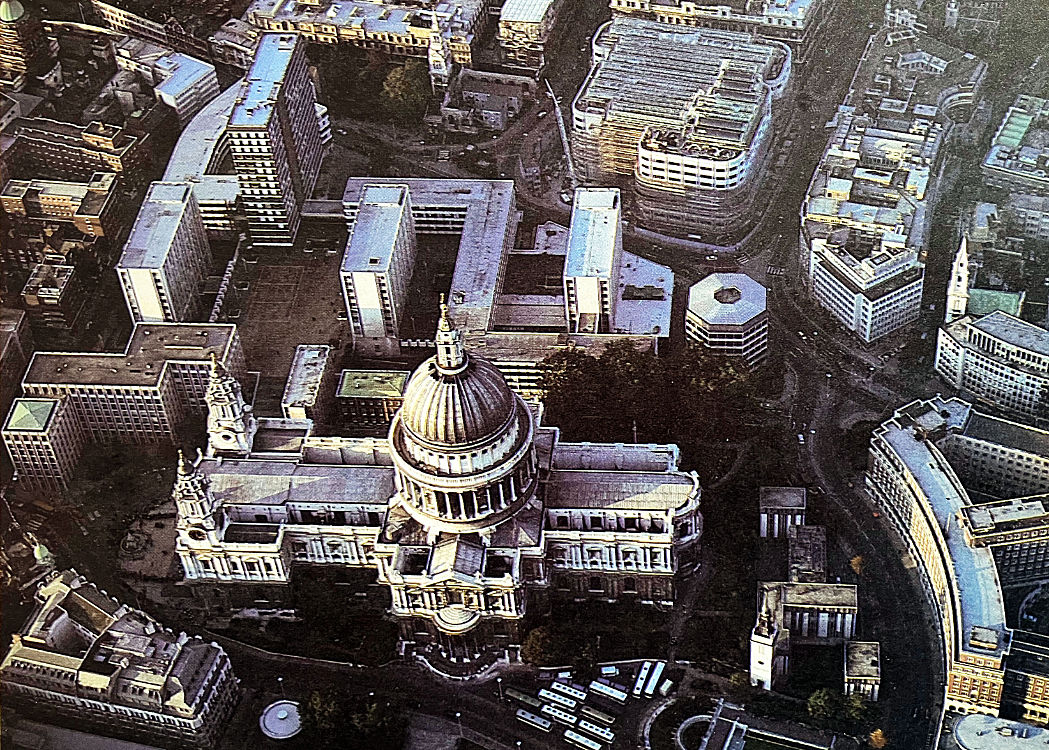
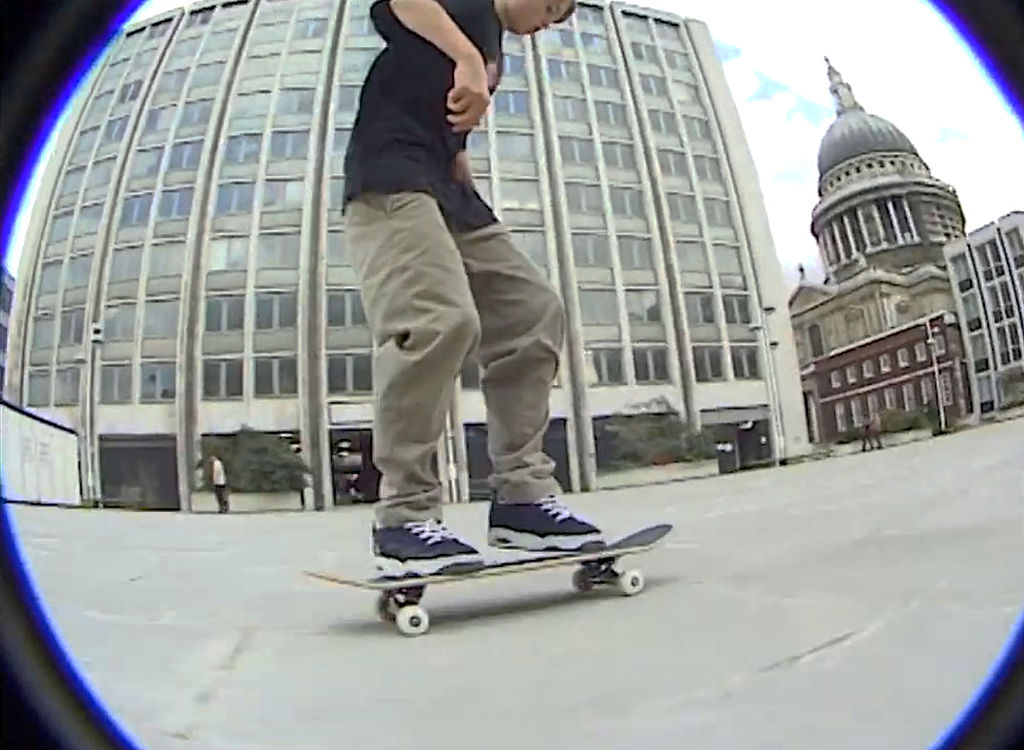
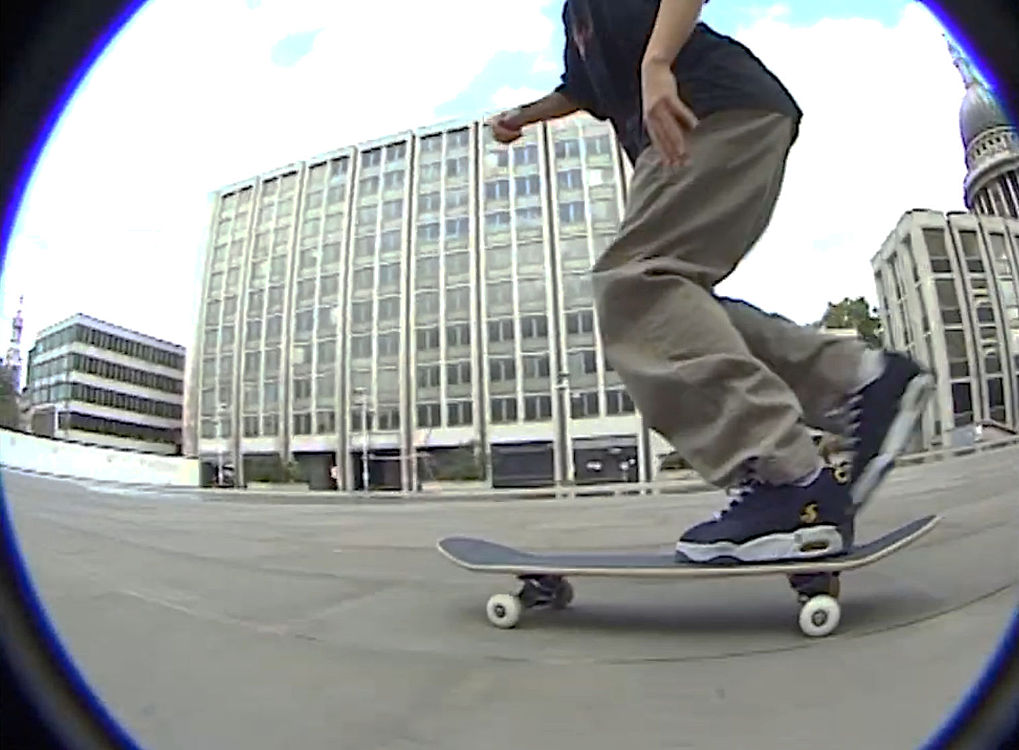
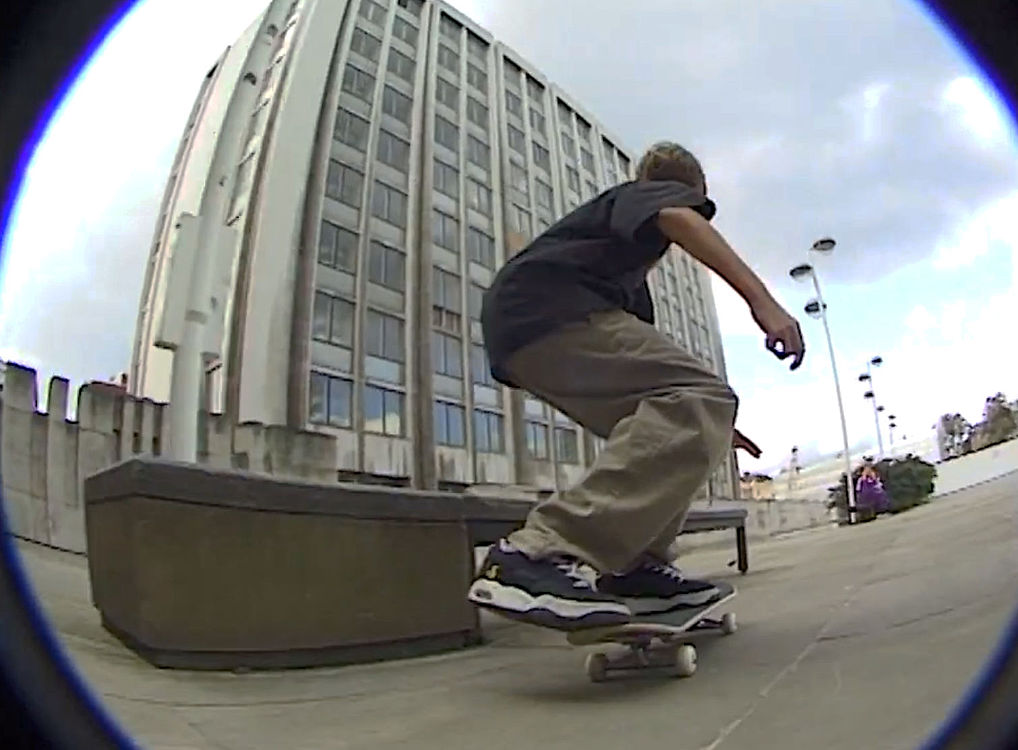
When digging through late 20th century photos of London, I’m always looking out for shots of Paternoster Square, next to St Pauls Cathedral. Not the current version, but the 1960s development demolished around 2000. I used to walk through it quite often for some reason, and it was a famous skate spot due to its expanses of paving and shallow steps. My skateboard wheels had St Pauls Cathedral on for that reason.
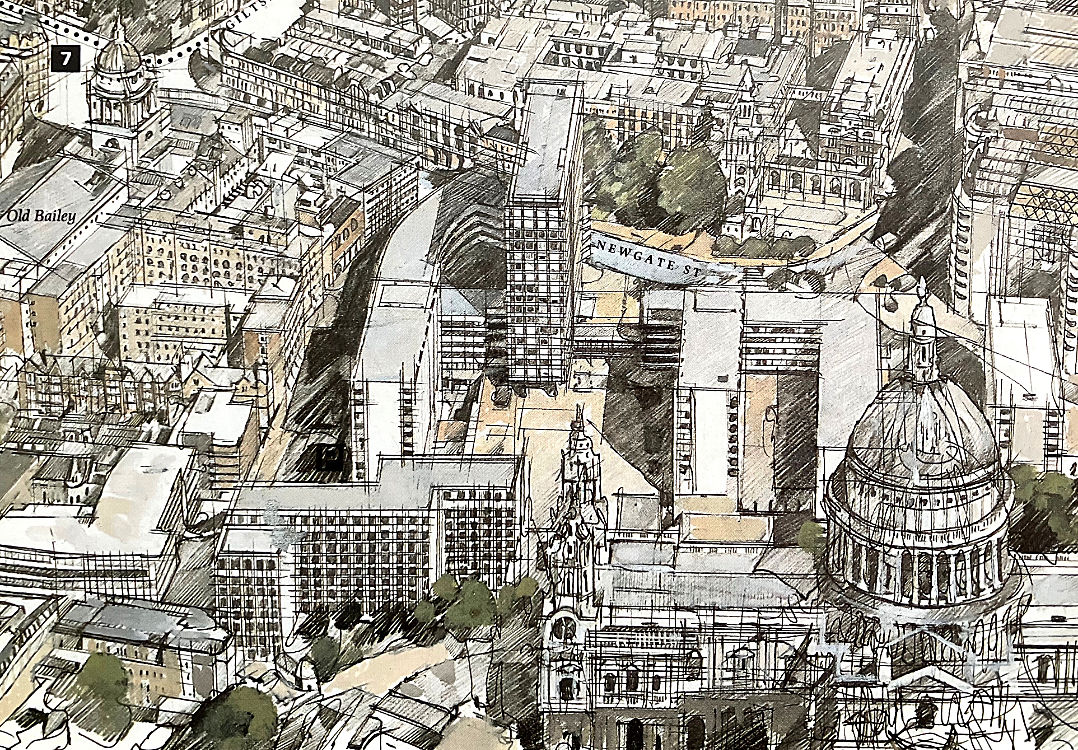
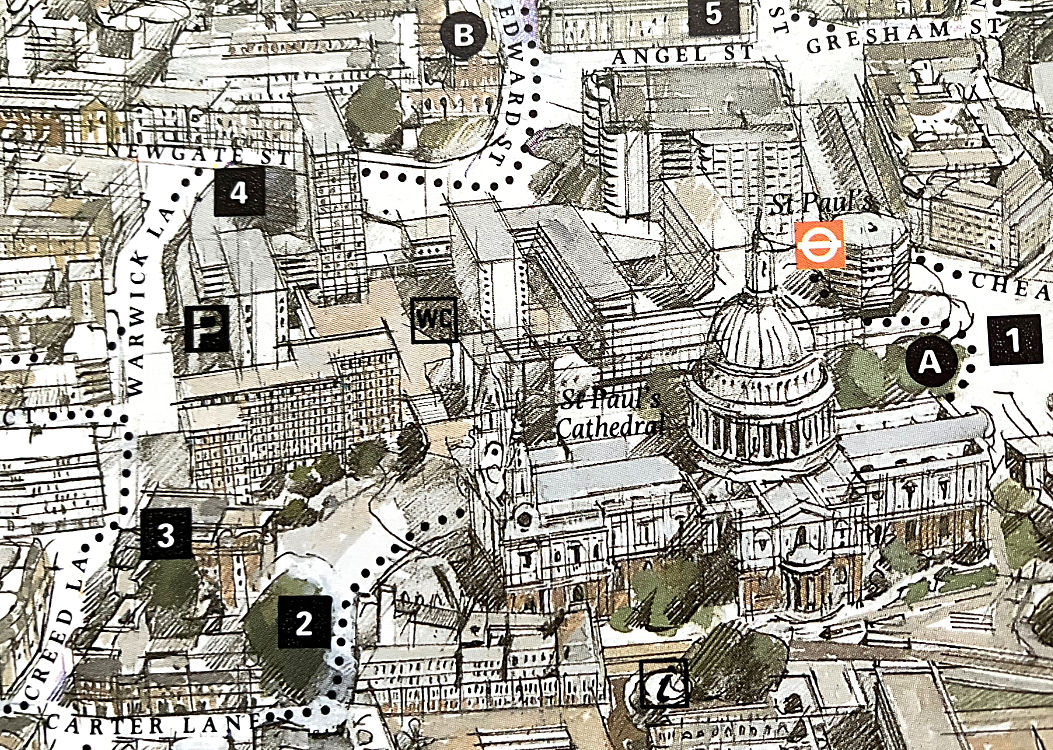
However, it’s quite hard to find any photos - it was so dull that photographers of all kinds systematically excluded it from their shots. It’s always sliding out of frame, and never the subject. I was surprised to find it well illustrated in an old book, but the illustrations make it look too interesting. About the only place to see it is in 1990s skateboarding movies! [first one is all at Paternoster, second one from 1:43 to 2:43]

In 1954 there was a silly spat in the pages of the Architectural Review. Charles Holden (in his town planner role) was advocating Classical redevelopment around St Pauls. The editor of the AR got on his very high modernist horse and severely criticised Holden, who made a patient but hurt reply, and was slapped down again as a reactionary. Reading the exchange now one feels that Holden deserved more respect. Especially as the doctrinaire modernist solution failed so badly. In fact neither man got what they wanted.
To the east of St Pauls, New Change was rebuilt in a busy but exhausted Neo-Georgian style, proof that the idiom had run out of road. It lacked the dull virtues of the style, which would at least have provided a dignified backdrop for the cathedral. If there is such a thing as passive-aggressive architecture, this was it. It sterilised a large part of the neighbourhood for 50 years.
To the north, the site of Paternoster Square was rebuilt as a doctrinaire Modernist precinct, pedestrian decks above car parking, between stumpy slab blocks. It was a piece of the ‘pedway’ system of first-floor pedestrian routes, but it didn’t join up with anywhere. A facade design of polite monotony was repeated like wallpaper across almost all of the blocks. It lacked the disrespectful virtues of brutalism that would have made it iconic, eventually. A slice of the Barbican, or the Southbank Centre, would have been better next to St Pauls regardless of initial outrage.
Ironically the care taken around St Pauls resulted in bad urban design. Compromised, second-guessed. The classical and the modernist developments were both too big, too monotonous, architecturally debased.
In the 2000s both sites were rebuilt as their opposite. Modernist Paternoster Square was rebuilt in an abstract classical style with streets and an actual square. Classical New Change was rebuilt as a Deconstructivist glass box sliced open by public routes. Both work. Both are far better than the preceding schemes.
In the end it wasn’t about style. It was about urbanism - permeability, walkability, scale. It was about architectural quality. Great buildings next to great buildings always works.